OdorCap® 5700 Helps Eliminate Odor Complaints While Improving Treatment Performance
A lubricant and fuel technology company experiencing recurring odor complaints implemented a targeted odor-control program using OdorCap® 5700. By identifying and addressing the conditions contributing to odor generation, the facility successfully controlled odors while improving wastewater treatment performance.
Benefits
- Eliminated odor complaints from the surrounding community
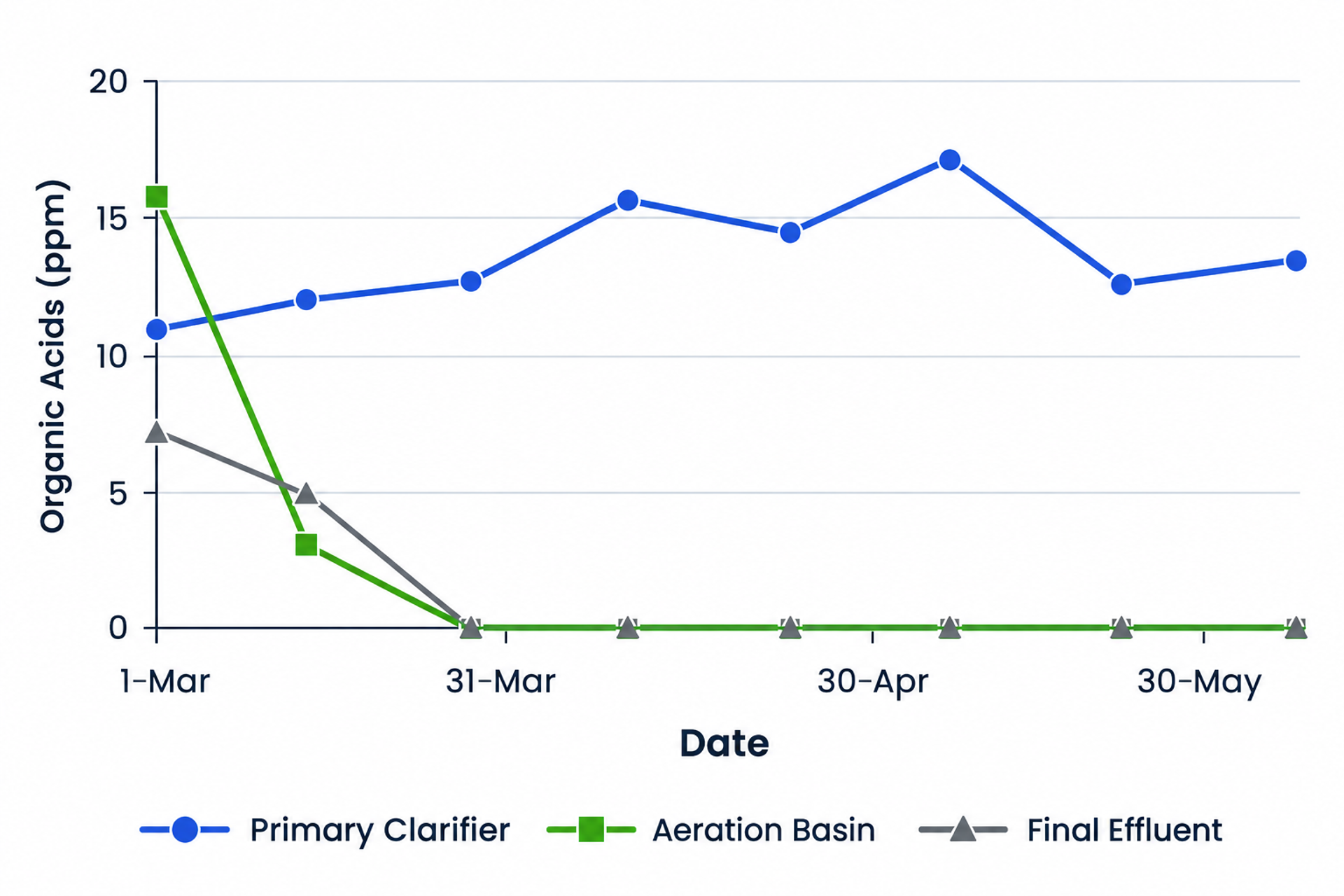
- Reduced organic acids by 80% within the first week
- Reduced organic acids to nondetectable levels by the third week and maintained those levels thereafter
- Reduced methyl mercaptan from 0.4 ppm to less than 0.1 ppm
- Increased TOC removal efficiency by 6%
Application
The facility received numerous odor complaints from the neighboring community and sought to identify and address the underlying causes within its wastewater treatment system.
A comprehensive odor analysis was conducted to measure organic acids, organic sulfides, and oxidation-reduction potential (ORP). The analytical results were evaluated using an established odor model, which indicated that the aeration basin was the primary location where odor-causing compounds were being stripped into the atmosphere. The analysis also identified the sulfur recovery unit as a significant contributor to the odor problem.
Further evaluation of the aeration basin identified several conditions conducive to odor generation:
- Low dissolved oxygen
- Negative ORP
- High TOC in the aeration basin and primary clarifier
- High organic acid concentrations entering the aeration basin
- Increasing organic acid concentrations within the aeration basin
- High organic sulfide concentrations in the aeration basin
Based on these findings, the facility implemented a combined treatment strategy. A supplemental nitrate-based treatment was used to shift ORP in a positive direction and provide an alternative electron acceptor under low-oxygen conditions. OdorCap 5700 was added to the aeration basin to support the biological degradation of sulfides, organic acids, mercaptans, and other odor-causing compounds. Together, these treatments created conditions that reduced odor formation while supporting biological treatment and organic removal.
Results
The odor-control program produced measurable improvements shortly after implementation.
Organic acid concentrations in the aeration basin decreased by approximately 80% during the first week. By the third week, organic acids had been reduced to nondetectable levels and remained at those levels throughout the remainder of the documented monitoring period.
Methyl mercaptan decreased from 0.4 ppm to less than 0.1 ppm, while TOC removal efficiency increased by 6%. Most importantly, odor complaints from the surrounding community were eliminated.
Conclusion
By combining targeted environmental adjustments with OdorCap 5700 bioaugmentation, the facility addressed the conditions contributing to odor generation within its activated sludge system.
Rather than relying solely on downstream odor management, this data-driven approach targeted odor at its source while supporting overall wastewater treatment performance.
Loading...