419-386-2813
Immediate biological activation for low-turbulence systems
UPC: 603189000313
Form:
Use:
Date of Disclosure: 2025-12-06T06:01:00
Date code
The first two numbers represent the last two digits of the calendar year produced. The last three numbers represent the day of the year the product was packaged. E.G. 19134 would be the 134th day of 2019.
SDS
306 - Rapid Release FOG Block SDS English
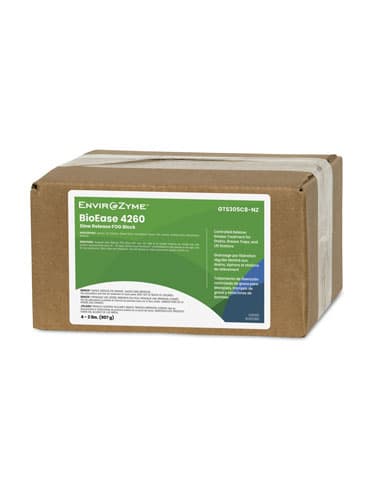
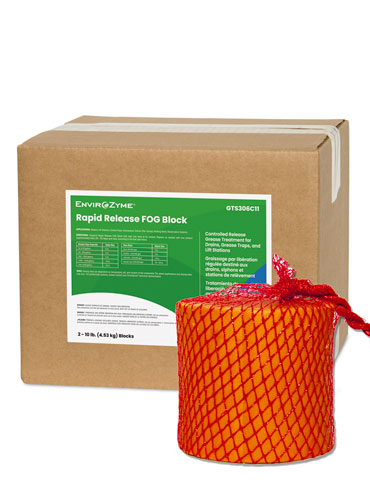
Rapid Release FOG Block is a biological solution for routine FOG and organics control. It contains an advanced blend of microorganisms designed to provide continuous biological treatment in institutional settings for up to 30 days.
Rapid Release FOG Block dissolves gradually releasing billions of beneficial microorganisms into the grease trap to digest FOG and maintain clean, free-flowing systems. Formulated with surfactants and binders, (Rapid Release FOG Block is ideal for institutional and foodservice applications.

February 19, 2026
A Japanese supermarket chain conducted a multi-phase trial to improve grease trap performance using Rapid Release FOG Blocks and Odor Control Blocks, achieving a 50% reduction in oil accumulation and noticeable odor improvement. The enhanced treatment approach resulted in cleaner chambers and a 50% reduction in pump-out cleaning time, delivering measurable labor savings without changing maintenance frequency.
February 24, 2020
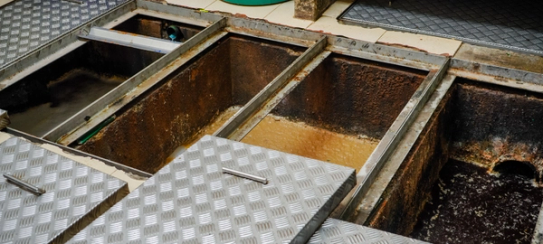
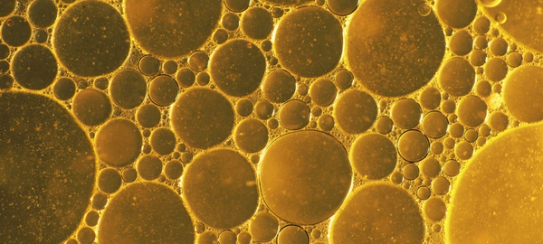
What Are Grease Traps? A grease trap is a plumbing device designed to intercept most greases and solids before they enter a wastewater disposal system. The traps reduce the amount of fats, oils, and greases (FOGs) that enter sewers. How Do They Work? The grease trap tank acts as a reservoir holding the wastewater and food solids that enter the trap. As the wastewater cools, the fat, oil, and grease (FOG) harden and the food solids settle. The FOG, being lighter than water, floats to the top of the grease trap.
October 21, 2019
EnviroZyme® conducted a restaurant lift station trial in order to study FOG (fat, oil, and grease) reduction resulting from treatment with bacteria, specifically with our FOG Block product. The lift station in our trial located outside the busiest restaurant in a tourist town had been experiencing problems related to FOG loading from the restaurant's wastes for the better part of the summer.
April 11, 2023
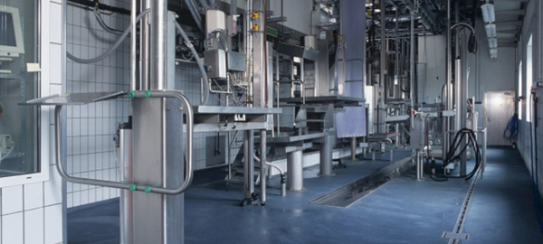
328.4 million tons of meat are consumed across the globe every year, creating an excess of animal remains. Animal rendering plants process animal remains sourced from slaughterhouses or farms and ranches.
February 23, 2023
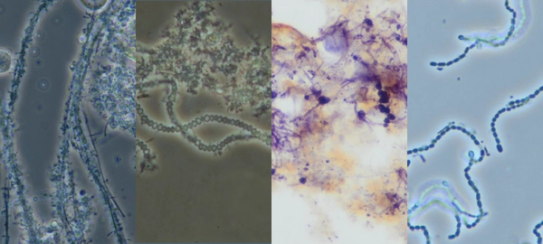
Filamentous bacteria grow in long thread-like strands in which cells do not separate from each other after cell division and grow in the form of filaments. Filaments can dominate in wastewater treatment systems, which has both advantages and disadvantages.
January 23, 2023
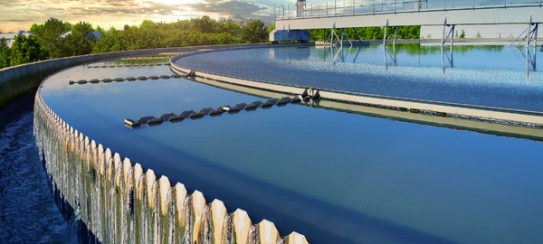
It is crucial for wastewater treatment plants to have a perfect balance of nutrients, or else it can be harmful and impossible to achieve optimal efficiency.

May 10, 2019
Our last blog post examined water pollution as a result of specialization in industry, specifically in the food industry. For many of the same reasons that food production is concentrated into large, specialized factories, people tend to congregate in large cities. When people live closely together, they enjoy benefits such as near proximity to jobs, food, healthcare, and entertainment.