50% FOG Reduction Delivers Measurable Labor Savings for Commercial Grease Trap

50% FOG Reduction Delivers Measurable Labor Savings for Commercial Grease Trap

February 19, 2026

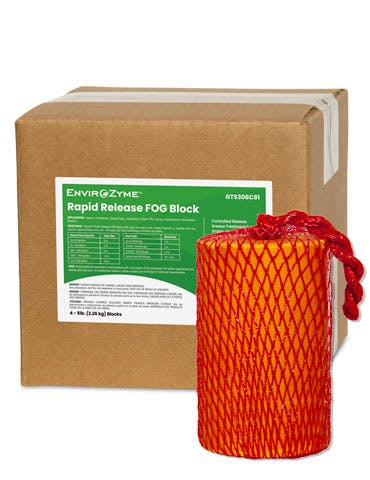
A Japanese supermarket chain conducted a multi-phase demonstration trial to address recurring grease trap performance issues, including elevated fats, oils, and grease (FOG) concentrations, odor complaints, and frequent cleaning requirements.

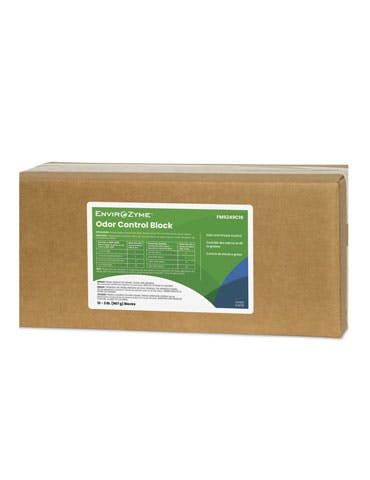
The trial evaluated the performance of Rapid Release FOG Blocks and Odor Control Blocks under real operating conditions to improve grease breakdown, odor control, and overall grease trap cleanliness. The demonstration was conducted at a retail facility with support from an industrial wastewater and environmental solutions provider, with results observed over sequential evaluation periods.

Benefits

  • Reduced visible oil and grease accumulation across multiple grease trap chambers
  • Improved odor conditions during routine operation
  • Enhanced breakdown and dissolution of FOG under low-flow conditions
  • Cleaner grease trap conditions prior to scheduled cleanings
  • Potential reduction in maintenance effort and cleaning frequency

Application

The grease trap treated wastewater from a retail food operation and had the following characteristics:

  • Location: Outdoor installation
  • Flow rate: Approximately 200 L/min
  • Capacity: Approximately 250 L
  • Configuration: Three chambers
    • First chamber: Influent
    • Second chamber: Separation
    • Third chamber: Effluent

Trial Phases

Phase 1: 30-day evaluation period

  • One Rapid Release FOG Block added to the second (separation) chamber
  • Objective: Establish a performance baseline FOG reduction and block dissolution under existing operating conditions

Phase 2: 26-day evaluation period

  • One Rapid Release FOG Block added to the first (influent) chamber
  • One Rapid Release FOG Block added to the second (separation) chamber
  • Netting was removed from the first chamber block to improve dissolution under low-flow conditions

Phase 3: 30-day evaluation period

  • One Odor Control Block added to the first (influent) chamber
  • One Odor Control Block added to the second (separation) chamber
    • A softer formulation of Odor Control Block was introduced to improve melting behavior and odor control performance under low-flow conditions

Throughout the demonstration, grease trap conditions were visually documented before scheduled cleanings to monitor FOG accumulation and overall cleanliness.

Results

After the 30-day Phase 1 evaluation period, the total amount of oil in the separation chamber was reduced by approximately 50%. However, limited improvement was observed in the effluent chamber, and incomplete block dissolution suggested that slow internal flow conditions were limiting overall performance.

[@portabletext/react] Unknown block type "image", specify a component for it in the `components.types` prop
[@portabletext/react] Unknown block type "image", specify a component for it in the `components.types` prop

During the 26-day Phase 2 evaluation period, performance improved sustainability after blocks were applied to both the influent and separation chambers and netting was removed from the first chamber block. Visual observations showed:

  • Minimal remaining oil in the separation chamber
  • Significant reduction in oil carryover to the effluent chamber
  • Improved overall cleanliness throughout the grease trap

Noticeable odor reduction compared to pre-trial conditions

[@portabletext/react] Unknown block type "image", specify a component for it in the `components.types` prop
[@portabletext/react] Unknown block type "image", specify a component for it in the `components.types` prop

The improved results were attributed to increasing biological contact with accumulated FOG and more complete block dissolution. Phase 3 was initiated to further optimize odor control and dissolution behavior using a soft block formulation.

[@portabletext/react] Unknown block type "image", specify a component for it in the `components.types` prop
[@portabletext/react] Unknown block type "image", specify a component for it in the `components.types` prop

Although the facility maintained its regular monthly grease trap cleaning schedule, improved conditions led to a 50% reduction in the time required for each pump-out and cleaning. Cleaner chambers and reduced FOG accumulation enabled maintenance personnel to complete service more efficiently, resulting in significant labor savings without altering the maintenance frequency.

Conclusion

This demonstration showed that Rapid Release FOG Blocks and Odor Control Blocks can significantly improve grease trap performance when product formulation and application strategies are adapted to specific conditions. Enhancements led to better FOG degradation, reduced odors, and improved grease trap cleanliness.

The results highlight the importance of adapting biological treatment approaches for low-flow grease trap environments and provide a practical framework for improving grease trap operations in retail food facilities.

Continue Exploring

Treated Versus Untreated Grease Traps

EnviroZyme team performed a grease trap study to better analyze field conditions.
Go to Page >
Treated Versus Untreated Grease Traps

Why Bacillus Species Are the Future of Odor Control

Learn how Bacillus bacteria reduce VFA levels and eliminate malodors.
Go to Page >
Why Bacillus Species Are the Future of Odor Control

Get in Touch

* Indicates a required field.

This site is protected by reCAPTCHA and the Google Privacy Policy and Terms of Service apply.
EnviroZyme Logo

Copyright © 2026 Envirozyme. All rights reserved.

Privacy PolicyCalifornia Civil Code

CA CC § 1714.43