Loading…
Loading…

As global refineries rapidly shift to lighter crude oil slates, wastewater systems are facing new and often unexpected challenges.
Many facilities are seeing performance decline without a clear cause. Nitrification starts to slip. Sludge doesn’t settle like it used to. Effluent becomes inconsistent. Operators adjust aeration or chemistry—but nothing seems to fix it. The issue often isn’t obvious. It’s emulsified oil.
Unlike free oil, which can be removed through API, CPI, or DAF systems, emulsified oil behaves differently. It stays suspended, bypasses physical separation, and enters the biological system. Once there, it creates a chain reaction:
The result is a gradual, but serious, decline in biological performance:
What makes this especially challenging is that everything can appear normal on the surface. Meanwhile, microbial activity is already being suppressed.
Rapid shifts in global crude sourcing are changing wastewater characteristics in ways many systems weren’t designed to handle. As refineries process lighter crude oils, hydrocarbons entering wastewater are more likely to form stable emulsions—making them harder to remove with traditional physical methods.
In many cases, systems designed for free oil removal are no longer enough.
Traditional treatment focuses on removing oil. But emulsified oil doesn’t respond the same way. Once it’s stabilized and dispersed, physical systems struggle to capture it alone.
The goal isn’t just removal—it’s conversion. To effectively manage emulsified oil, it must be broken down into smaller, more biodegradable components that microorganisms can consume.
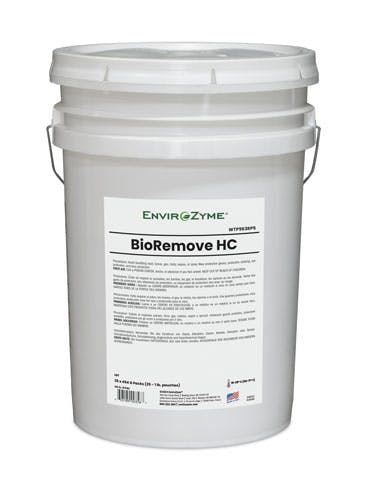
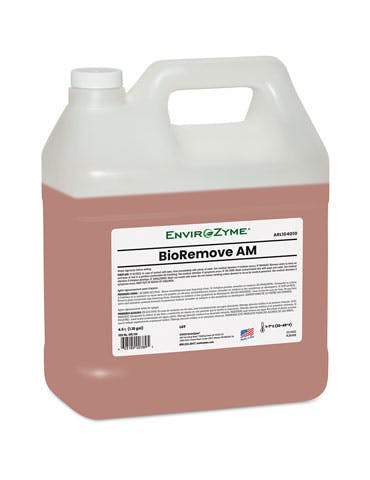
EnviroZyme’s bioaugmentation solutions are designed to address emulisifed oil at the biological level, where traditional systems fall short. Products like BioRemove HC, BioRemove RO, and BioRemove AM work by:
Instead of fighting emulsified oil with separation alone, this approach enables your biology to actively degrade it.
If your system performance is declining, but your oil removal systems appear to be working, the problem may already be past physical separation. Emulsified oil is easy to miss, but its impact on biological treatment is significant.
Addressing it requires more than removal. It requires a shift in approach. Because when oil can’t be separated, it must be biologically broken down.